
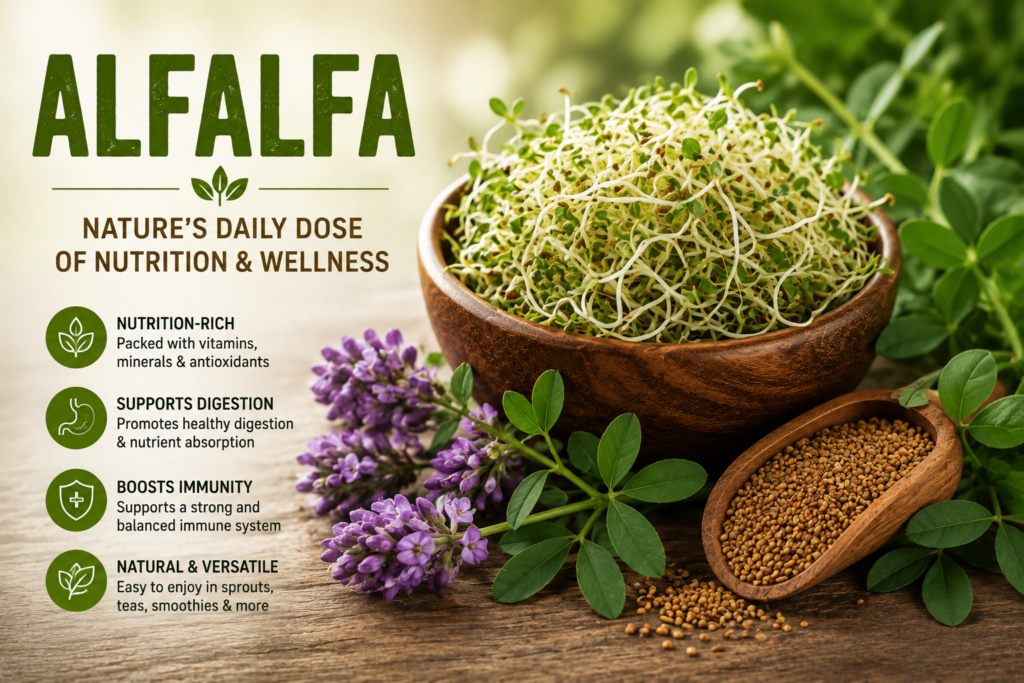
Medicago sativa L.
Description
Alfalfa is a perennial legume. Food products may include leaves, sprouts, or dried plant material; supplements may be sold as powders, capsules, teas, extracts, or tablets. The chemical composition can differ substantially between leaves, seeds, sprouts, and concentrated extracts. Alfalfa is a source of vitamin K and other nutrients, but nutrient content is product- and preparation-dependent.
Other Common Names
Alfalfa; lucerne; purple medic; California clover. Names and preparations can vary by region.
Medicinal Uses
Traditional or marketed uses include supporting cholesterol levels, digestion, lactation, arthritis, and general nutrition. Reliable human evidence is insufficient to establish alfalfa as an effective treatment for these conditions. Small or older studies and laboratory findings do not establish a clinically useful dose or benefit. Alfalfa should not replace prescribed treatment, dietary counseling, or evaluation of symptoms.
Dosage and Administration
There is no well-established, evidence-based medicinal dose for alfalfa. Products differ by plant part, extraction method, and concentration; do not convert a dose from one product to another. If using a commercial product, follow its label and ask a clinician or pharmacist to check whether it is appropriate for you. Alfalfa used as a normal food is different from concentrated supplements. Avoid self-treatment of a medical condition with alfalfa.
Common Preparations
Common preparations include fresh or dried sprouts, leaves, powders, capsules, tablets, teas, and extracts. Raw or lightly cooked sprouts have a food-safety risk because sprouts can support bacterial growth. Cooking sprouts thoroughly reduces, but may not eliminate every risk and can alter nutrients. Supplements are not necessarily standardized, and quality can vary; choose products with transparent labeling and independent quality testing when available.
Alfalfa supplements come from the legume alfalfa (Medicago sativa) and are sold as dried leaf powders, extracts, tablets, capsules, seed powders, or promoted as fresh sprouts. As a food, alfalfa provides nutrients such as vitamin K, but evidence that alfalfa supplements treat or prevent specific medical conditions is limited. Supplements are more concentrated than typical dietary servings and should not be assumed to have the same safety profile as alfalfa used as food.
What are alfalfa supplements?
Products labeled as alfalfa supplements may contain whole-leaf powder, standardized extracts, seed or sprout powders, or formulations combined with other herbs or vitamins. Labels, dosing instructions, and purity vary by manufacturer.
Uses and evidence
Alfalfa supplements are marketed for a range of uses (for example, general nutrition or support for various conditions), but high-quality clinical evidence supporting medicinal benefits is limited. Nutrient content—such as vitamin K—means alfalfa can contribute to diet, but clinical claims should be evaluated on a product-by-product basis and discussed with a clinician.
Forms and dosage
There is no single standardized therapeutic dose for alfalfa supplements. Typical products list serving sizes on the label (for example, tablets or capsule counts, or teaspoons of powder). If considering a supplement, follow the manufacturer’s directions and consult a clinician or pharmacist to determine an appropriate product and dose for your situation.
Safety, interactions, and precautions
Concentrated alfalfa supplements may carry risks not present when alfalfa is consumed as a food:
- Vitamin K content can interfere with anticoagulant medications such as warfarin; people taking warfarin should discuss alfalfa supplements with their prescribing clinician or pharmacist before use.
- People with autoimmune conditions or those taking immunosuppressive medications should be cautious, as concentrated botanical supplements can have different immune effects than foods.
- Pregnant and breastfeeding people should avoid or discuss use of alfalfa supplements with their clinician, since safety data are limited.
Food safety: raw sprouts
Raw alfalfa sprouts can be a source of foodborne pathogens and have been implicated in outbreaks associated with sprouts in general. People at higher risk for foodborne illness (pregnant people, very young or older adults, and immunocompromised people) should avoid raw sprouts.
Bottom line
Alfalfa supplements may add nutrients but have limited evidence for medicinal benefits and can pose safety concerns in some situations. Discuss any intended use of alfalfa supplements with a clinician or pharmacist, especially if you are pregnant, breastfeeding, have an autoimmune condition, take warfarin or other blood thinners, or use immunosuppressive medicines.
This post provides general information and is not medical advice. For personalized recommendations, consult a qualified healthcare professional.
Evidence Summary
Evidence for therapeutic use is limited and not sufficient to support alfalfa for treating a disease. Alfalfa contains vitamin K, so its relevance as a food may be nutritional rather than medicinal. Claims about cholesterol, blood sugar, lactation, arthritis, or hormonal effects require better-quality clinical research. Laboratory or animal findings should not be presented as proven human benefits. The absence of good evidence does not prove that alfalfa is ineffective, but it does mean benefits and appropriate dosing remain uncertain.
Safety Considerations
Normal food amounts are generally considered different from medicinal or concentrated amounts, but individual risk varies. Alfalfa seeds and sprouts contain L-canavanine and other compounds that have raised autoimmune-safety concerns; case reports and pharmacologic considerations do not establish a precise safe dose. People with lupus or another autoimmune condition should avoid medicinal alfalfa unless specifically advised by their clinician. Raw sprouts may be contaminated with Salmonella, E. coli, or other pathogens. Supplement quality, contamination, and labeling accuracy can vary. Seek medical advice before using alfalfa medicinally, especially if pregnant, breastfeeding, immunocompromised, or managing a chronic disease.
Possible Side Effects
Possible effects include gastrointestinal upset, nausea, diarrhea, or allergic reactions. Raw sprouts can cause foodborne illness, including vomiting, diarrhea, abdominal pain, and fever. Rare or uncertain risks may include worsening of autoimmune symptoms or other effects from concentrated preparations. Stop use and seek prompt care for facial swelling, breathing difficulty, severe rash, persistent vomiting or diarrhea, bloody diarrhea, or signs of an autoimmune flare.
Interactions & Contraindications
Warfarin: alfalfa contains vitamin K, which can reduce or destabilize warfarin's anticoagulant effect; do not start, stop, or substantially change alfalfa intake without medical advice and appropriate INR monitoring. Immunosuppressive medicines: alfalfa may theoretically counter immune suppression or pose additional autoimmune concerns, but the clinical importance is uncertain; ask the prescriber before use. Other interactions are possible because supplement compositions vary. A pharmacist should review alfalfa alongside anticoagulants, diabetes medicines, hormone-related medicines, and medicines for autoimmune disease rather than relying on a generalized interaction list.
Who Should Avoid It
Avoid medicinal or concentrated alfalfa if you have lupus or another autoimmune condition unless your clinician specifically recommends it. Avoid raw or lightly cooked sprouts for pregnant people, young children, older adults, and people with weakened immune systems because of foodborne-illness risk; choose thoroughly cooked sprouts or another food instead. Do not use medicinal alfalfa during pregnancy or breastfeeding without professional advice because safety data are insufficient. Avoid self-treatment with alfalfa if taking warfarin or immunosuppressants. People with legume allergy should use caution and seek advice before trying supplements.
Frequently Asked Questions
Is alfalfa safe to eat?
Alfalfa used as a normal food is different from concentrated supplements. Raw sprouts can carry foodborne pathogens, so higher-risk people should avoid them or choose thoroughly cooked sprouts. Ask a clinician about medicinal products.
Does alfalfa lower cholesterol?
It is marketed for cholesterol support, but reliable human evidence is limited and does not establish an effective dose or dependable treatment effect. It should not replace prescribed lipid-lowering treatment.
Can alfalfa increase breast milk?
Alfalfa is sometimes promoted as a galactagogue, but evidence is insufficient to confirm effectiveness or safety. Breastfeeding people should consult a healthcare professional before using concentrated products.
Can I take alfalfa with warfarin?
Do not change alfalfa intake without speaking with the clinician managing your warfarin. Its vitamin K content may affect anticoagulation and INR stability, particularly when intake changes substantially.
Why are alfalfa sprouts a concern?
Sprouts can support the growth of bacteria such as Salmonella and E. coli. Thorough cooking lowers the risk; raw sprouts are a particular concern for pregnant people and those with weakened immune systems.
Is alfalfa appropriate for lupus?
Medicinal alfalfa is generally best avoided in lupus and other autoimmune conditions unless specifically approved by the treating clinician, because alfalfa constituents have raised autoimmune concerns and the safety evidence is inadequate.
Sources
National Center for Complementary and Integrative Health (NCCIH), Herbs at a Glance and About Herbs resources: https://www.nccih.nih.gov/health/herbsataglance — useful for evidence and safety context, but an alfalfa-specific NCCIH monograph may not be available.
U.S. Food and Drug Administration (FDA), "Recognized Risks of Raw Sprouts": https://www.fda.gov/food/consumers/what-you-need-know-about-sprouts — food-safety information on raw and lightly cooked sprouts.
U.S. Department of Agriculture Agricultural Research Service, FoodData Central: https://fdc.nal.usda.gov/ — nutrient data, including vitamin K values where listed for specific alfalfa foods.
National Institutes of Health Office of Dietary Supplements, Vitamin K Fact Sheet for Health Professionals: https://ods.od.nih.gov/factsheets/VitaminK-HealthProfessional/ — information relevant to vitamin K and anticoagulation; it does not establish a medicinal dose for alfalfa.
Memorial Sloan Kettering Cancer Center, About Herbs: https://www.mskcc.org/cancer-care/integrative-medicine/herbs — a clinically oriented reference that may discuss alfalfa evidence and precautions; consult the current entry rather than relying on an archived summary.
These references support general evidence and safety statements. They do not prove that alfalfa treats disease or establish a universal dose.