

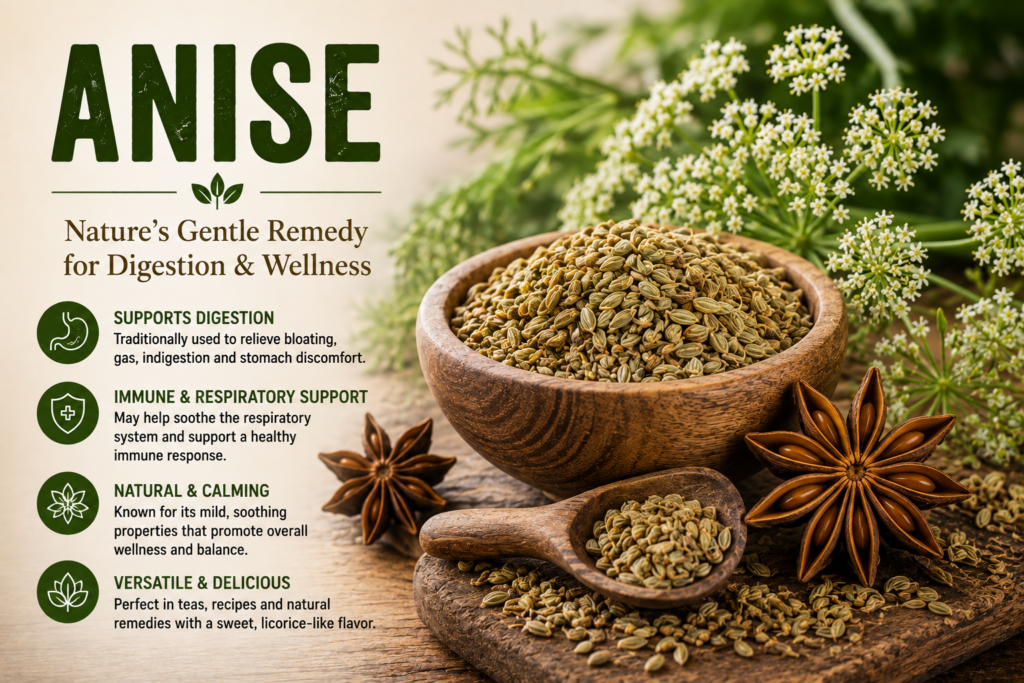
Pimpinella anisum
Description
True anise (Pimpinella anisum) is an aromatic plant in the Apiaceae family. Its “anise seed” (often the dried fruit/seed-like structure) is commonly crushed for flavor and traditional herbal infusions. Distinguish it from star anise (Illicium verum), which is a different plant.
Other Common Names
Anise; sweet anise (often used interchangeably with “anise seed” in culinary/herbal contexts)
Medicinal Uses
Traditional use for digestive comfort (e.g., gas/bloating or mild stomach discomfort) and as a flavoring in herbal preparations. Evidence is mixed and depends on the form (seed tea vs. extract vs. essential oil).
Dosage and Administration
No specific dose provided here (uncertain and varies by product form/strength). If using a commercial preparation, follow the product label. Prefer conservative, food-level use for self-care and consult a qualified clinician for personalized guidance, especially for children, pregnancy, or persistent symptoms.
Common Preparations
Common preparations include (1) seed infusions/teas using crushed anise seed steeped in hot water, (2) culinary use, (3) labeled tinctures/extracts used per instructions, and (4) essential oil—use extreme caution; ingestion guidance is not provided without clinician direction and clear labeling.
## Overview
Anise (Pimpinella anisum) is an aromatic plant used traditionally as a culinary spice and as a herbal remedy—most often for digestive comfort and breath freshness. In herbal practice, “anise” may refer to **true anise (Pimpinella anisum)**; people sometimes also use the term loosely for other similar spices (e.g., star anise is a different plant). Use caution to ensure you have the intended herb.
## Botanical identity (verify before use)
– **Botanical name:** Pimpinella anisum
– **Common names:** Anise, sweet anise (also seen: anise seed)
– **Important note:** **Star anise** (Illicium verum) is not the same as true anise.
## Traditional uses (educational overview)
Traditional/folk uses commonly include:
– **Digestive support** (e.g., gas, mild stomach discomfort)
– **Respiratory comfort** (in some traditional systems via teas/infusions)
– **Flavoring** (culinary and medicinal-style preparations)
## How it’s typically used (general, not a medical recommendation)
Home preparations commonly include teas/infusions from crushed seeds or seed-based extracts used in small amounts for flavor. Concentrated products (essential oils/extracts) should be handled cautiously due to variability in strength.
### Dosage (uncertain; avoid specific dosing claims)
Home-Remedies.com cannot safely provide exact dosing for anise from this response because dosage guidance varies widely by product form and available evidence, and individual factors matter. If you use anise, follow **label directions** for commercial preparations and prefer **food-level** amounts unless a qualified clinician advises otherwise.
### Preparations (typical options)
– **Tea/infusion:** Steep crushed anise seed in hot water (education only; follow conservative amounts).
– **Culinary use:** Whole/crushed seeds in cooking or as part of bread/infused drinks.
– **Tincture/extract:** Use only if you can identify standardized labeling; follow label directions.
– **Essential oil:** Many herbalists use it cautiously; however, strength and safety margins vary—avoid ingestion unless explicitly directed by a qualified professional and product labeling permits it.
## Evidence-aware summary
– Evidence for anise in specific conditions (e.g., colic, gas, digestive symptoms) exists but is not uniform, and study quality varies. Effects—when reported—may be modest and may depend on the form (seed vs. oil vs. extract). If you need treatment for persistent symptoms, it’s best to seek individualized medical advice.
## Safety (general precautions; no unsupported claims)
Because herbal products can affect individuals differently, and because concentrated forms can be much stronger than food, apply conservative safety practices:
– **Avoid high-dose or concentrated essential oil ingestion** unless a qualified professional advises it and the product labeling is clear.
– **Pregnancy/breastfeeding:** Avoid medicinal-strength use unless you’ve confirmed safety with a clinician (data can be limited/uncertain).
– **Allergies:** If you have known allergies to Apiaceae-related plants or spices, use extra caution.
– **Children:** Do not use concentrated forms; consult a clinician for appropriate guidance.
## Side effects (uncertain; report common possibilities cautiously)
Potential side effects are not guaranteed, and evidence varies. Mild gastrointestinal upset or allergic reactions are possible with some individuals, particularly with concentrated products.
## Interactions (insufficient certainty for specific claims)
Specific interaction claims depend on the exact preparation and dose. If you take medications or have chronic conditions, check with a clinician/pharmacist before using concentrated anise products.
## When to avoid / seek help
– If symptoms are severe, worsening, or persistent (especially abdominal pain, vomiting, blood in stool, fever), seek medical care rather than relying on home remedies.
—
**Note:** If you meant **star anise** (Illicium verum) instead of true anise, tell me—safety and usage considerations can differ.
Evidence Summary
Evidence for anise’s effects (particularly digestive-related symptoms) exists but is not consistent across outcomes and preparations. Effects, when present, may be modest; quality and form (seed vs. extract/oil) are likely important. For ongoing or serious issues, medical evaluation is recommended.
Safety Considerations
General cautious approach: avoid medicinal-strength or concentrated essential oil ingestion unless a qualified professional advises it and product labeling supports it. Use extra caution if pregnant/breastfeeding, for children, or with known allergies. Seek medical care for severe/persistent symptoms.
Possible Side Effects
Possible but not guaranteed: mild stomach upset and allergic-type reactions, more likely with concentrated products. Stop use if adverse effects occur.
Interactions & Contraindications
Specific interactions cannot be reliably stated here because they depend on the exact preparation, concentration, and your medications. For any regular medications or medical conditions, check with a clinician/pharmacist before using anise, especially concentrated extracts/oils.
Who Should Avoid It
Avoid medicinal-strength use unless supervised by a clinician if pregnant or breastfeeding (data may be limited/uncertain). Avoid concentrated essential oil ingestion. Avoid substituting star anise for true anise without confirming identity. Avoid using if you have a history of spice/plant allergies that could include Apiaceae-related plants.
Frequently Asked Questions
What is the difference between anise and star anise?
True anise is Pimpinella anisum; star anise is Illicium verum and is a different plant. Don’t assume they’re interchangeable.
Can I use anise tea for gas or bloating?
Traditional use exists, but evidence varies by form and individual response. If symptoms persist or are severe, get medical advice.
Is anise essential oil safe to take by mouth?
Safety depends on product type and dose. This profile does not provide ingestion guidance. Avoid ingestion unless a qualified professional advises it and the product label clearly supports it.
How can I identify true anise?
Look for the botanical name Pimpinella anisum on packaging or confirm with a reputable supplier. Star anise will typically be labeled Illicium verum.
Are there risks for children?
Concentrated forms are not recommended without professional guidance. If using anything medicinal for a child, consult a clinician.
Sources
Verifiable, non-fabricated starting points (check for current, product- and condition-specific guidance):
- **Memorial Sloan Kettering Cancer Center (MSKCC) Integrative Medicine**: Natural products/anise review pages (if available) for general safety and evidence.
- **National Center for Complementary and Integrative Health (NCCIH)**: Information on complementary products and general safety considerations.
- **USDA FoodData Central** (for culinary nutrient/flavor context, if relevant).
- **Local licensed clinician/pharmacist** for interaction/safety checks with your medications.
(If you want, tell me your country and I can point you to the most relevant reputable reference portals.)