

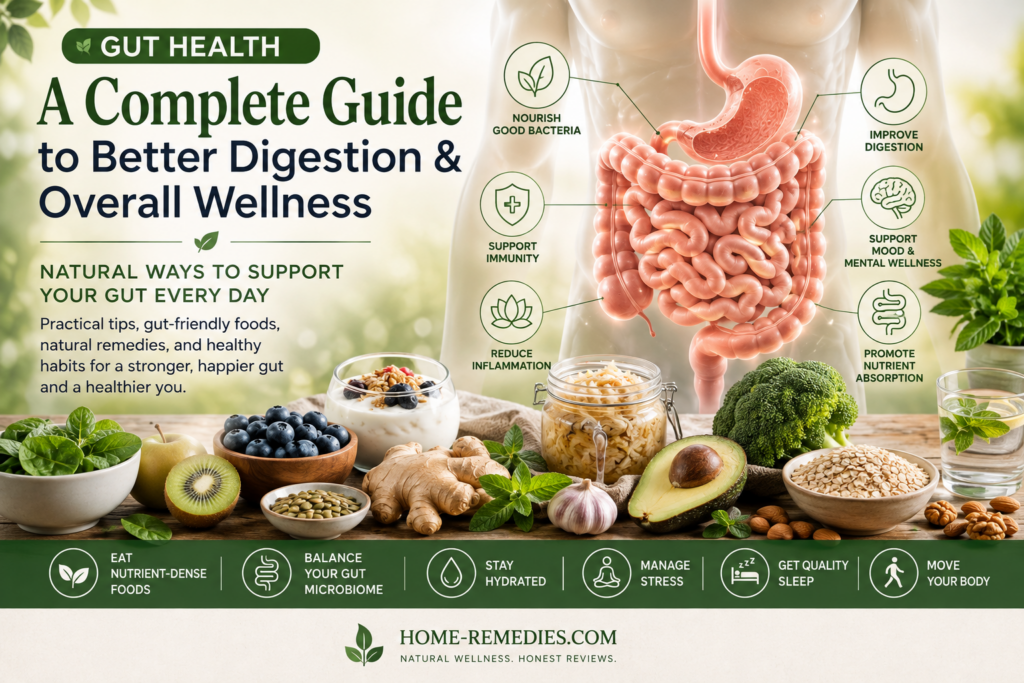
Gut health is shaped by diet, the microbiome, digestive function, and lifestyle factors. Practical support emphasizes gradual dietary changes (especially fiber diversity), responsible use of fermented foods and probiotics, gentle digestive aids when needed, and lifestyle habits that reduce stress and support sleep and activity. Safety, individual variation, and evidence quality guide which home strategies are appropriate.
Start Here
You’ll finish this article with a clear framework for supporting gut health at home: practical dietary changes, what to expect from probiotics and supplements, daily routines that help digestion, and when to consult a clinician.
Key Takeaways
- Gut health is multi-dimensional: diet, microbes, digestion, and lifestyle interact. Incremental changes (like gradual fiber increases) are safer and often more effective than drastic shifts. Probiotics and supplements can help in some situations but are not universal fixes. Safety, individual differences, and high-quality evidence matter—check with a clinician for persistent or severe symptoms.
What You'll Learn
- Gut health pillar overview
- Core concepts and framework
- Supporting topic: Diet and nutrition for gut health
- Supporting topic: Probiotics, prebiotics, and fermented foods
- Supporting topic: Digestive processes and supplements
- Supporting topic: Lifestyle factors affecting gut health
- Supporting topic: Gut conditions and home remedies
- Safety and evidence
Why This Topic Matters
The gut affects digestion, nutrient absorption, immune signaling, and can influence wellbeing. Supporting gut health can reduce discomfort, improve regularity, and enhance quality of life. However, individual responses vary and some conditions need medical assessment.
Common Causes or Triggers
Diet low in fiber and high in processed foods
Insufficient hydration
Irregular meal patterns
Chronic stress and poor sleep
Medications (e.g., antibiotics, some painkillers)
Underlying medical conditions (to be evaluated by a clinician)
Note: Specific causes for an individual require medical evaluation—this list is for general awareness and needs verification for personal cases.
Natural Strategies to Consider
Gradually increase dietary fiber from whole foods
Prioritize diverse plant foods for prebiotics
Consider fermented foods if tolerated
Stay well-hydrated and maintain regular meal timing
Manage stress with relaxation techniques
Maintain regular physical activity
Prioritize sleep hygiene
Use supplements (probiotics, enzymes) selectively and under guidance
Featured Remedies
- Psyllium husk or other gradual-soluble fiber sources (start low, increase slowly)
- Fermented foods (yogurt, kefir, miso) if tolerated
- Oat beta-glucan and whole oats for soluble fiber
- Peppermint oil capsules for some IBS symptoms (evidence varies; check safety and dosing)
- Note: Each item requires checking for personal contraindications and clinician approval where relevant.
Featured Herbs & Supplements
- Ginger (for nausea/digestion comfort; avoid high doses in certain conditions)
- Chamomile (calming; may help mild digestive discomfort)
- Peppermint (enteric-coated capsules used for some bowel symptoms)
- Note: Herbs can interact with medications and conditions—verify with a clinician or pharmacist.
Simple Daily Routine
Morning: hydrate 1–2 cups of water on waking, include a fiber-rich breakfast
Midday: balanced lunch with vegetables, whole grains or legumes, and a protein source
Evening: lighter dinner at least 2–3 hours before bed
Snacks: fruit, nuts, or whole-grain options rather than processed snacks
Movement: short walks after meals to support digestion
Stress: 5–15 minutes of breathing or mindfulness daily
Sleep: consistent bedtime schedule aiming for 7–9 hours
7-Day Gut-Friendly Meal Plan
Download a simple 7-day meal plan focused on gradual fiber increase, balanced meals, and fermented food options to try safely at home.
Get the Free GuideSafety Considerations
Always consider interactions, allergies, and underlying conditions before trying remedies. Introduce fiber and fermentable foods slowly to avoid bloating or gas. Use enteric-coated or clinician-recommended formulations for certain herbs (e.g., peppermint), and avoid self-prescribing high-dose supplements if you are pregnant, nursing, immunocompromised, or taking prescription medications. Verify product quality (third-party testing) before regular use.
Interactions & Who Should Avoid It
Anticoagulants and herbs (e.g., high-dose ginger) may interact—check with a clinician.
Probiotics may be contraindicated in severely immunocompromised people or those with central venous catheters—verify before use.
Certain supplements (e.g., high-dose vitamin C, magnesium) can affect stool frequency and interact with medications.
Digestive enzymes and acid-suppressing drugs can alter digestion—discuss co-use with a clinician.
When to Seek Professional Care
Unintentional weight loss
Persistent or severe abdominal pain
Blood in stool or black tarry stools
Repeated vomiting or inability to keep fluids down
High fever with abdominal symptoms
New or progressive swallowing difficulties
If any of the above occur, seek medical attention promptly.
Frequently Asked Questions
What is the best diet for gut health?
There is no one-size-fits-all diet; a diverse, plant-rich diet with gradual fiber increases, regular meals, adequate hydration, and attention to individual triggers is a practical starting point.
Will probiotics fix my gut microbiome?
Probiotics can help in specific situations, but they are strain- and condition-specific and not a guaranteed fix. Some people notice benefits while others do not; discuss strains and evidence with a clinician.
How quickly will I see improvements?
Minor changes (improved regularity, less bloating) can occur in days to a few weeks after dietary changes; meaningful microbiome shifts may take weeks to months. Timeframes vary widely—this is an estimate, not a guarantee.
Are fermented foods the same as probiotics?
Some fermented foods contain live microbes and act like probiotics, but their strains and counts vary. Packaged probiotic supplements may specify strains and doses; fermented foods offer dietary variety but are less controlled.
Can I take digestive enzymes daily?
Digestive enzymes can help with specific digestive complaints (e.g., after large meals) but routine daily use should be discussed with a clinician, especially if you have pancreatic or liver conditions.
When should I see a doctor about gut symptoms?
Seek medical care for red-flag symptoms (unintentional weight loss, blood in stool, severe or persistent pain, vomiting, fever) or when routine self-care does not improve symptoms.