

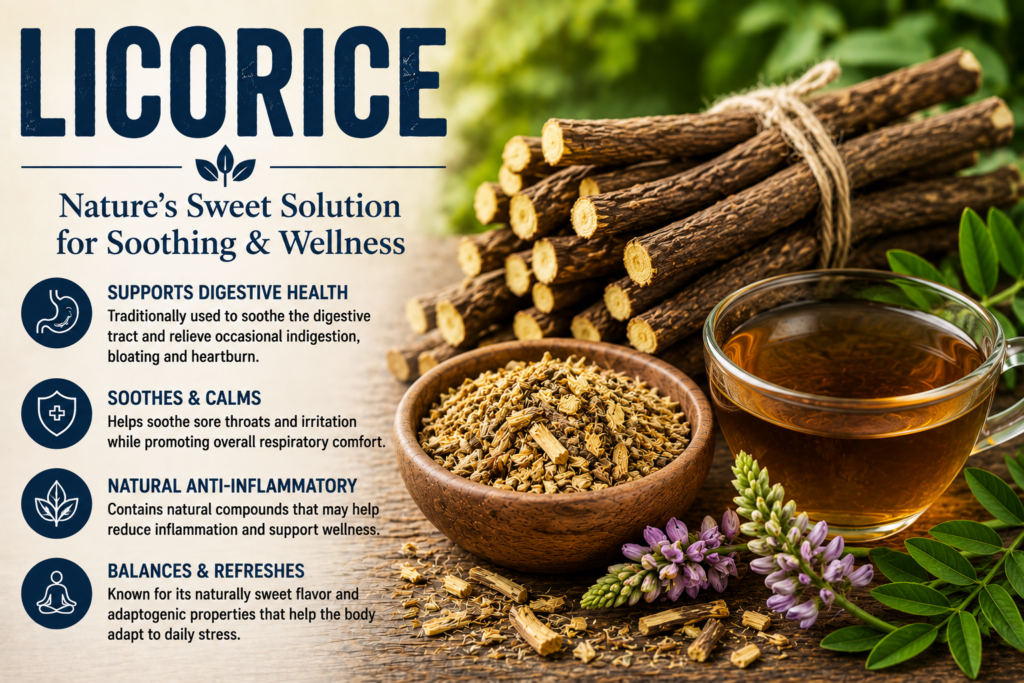
Glycyrrhiza glabra (commonly used; other Glycyrrhiza species exist)
Description
Licorice is a perennial legume. The medicinal material is typically the dried root (or extracts made from it). Taste and traditional uses come largely from its sweet compounds, but safety concerns are associated with glycyrrhizin (a constituent found in regular licorice root). Some products are “deglycyrrhizinated licorice (DGL),” which is designed to reduce glycyrrhizin content.
Uncertainty flag: Different studies and products may refer to different species (Glycyrrhiza glabra vs others), different extraction methods, and different standardized constituent levels—so effects can vary by product.
Other Common Names
Licorice root; liquorice; sweet root
Medicinal Uses
Traditional/commonly used purposes include:
- Throat and mouth comfort (especially as a soothing tea/infusion or lozenge)
- Digestive support (traditional use; product labels may cite “soothing” or “comfort” for the stomach)
Evidence-aware note: Licorice has been studied for various conditions, but outcomes and quality of evidence vary by indication, preparation (regular vs DGL), dose, and study design. For non-prescription use, it’s generally best treated as a traditional soothing herb rather than a guaranteed treatment.
Dosage and Administration
Caution: Home-Remedies.com cannot provide a universally safe dose for licorice root because risk depends on preparation strength (especially glycyrrhizin content), individual health conditions, and concurrent medications.
General educational guidance (not a specific dose):
- Use only the amount on the product label for licorice root, DGL, or licorice-containing teas/lozenges.
- If using dried root as tea/infusion, prepare according to the package instructions.
- Avoid long-term, high-dose, or “regular licorice root” use without clinician guidance—particularly if you have blood pressure issues or kidney concerns.
If you tell me the exact product/form (root tea, extract, DGL chewable, lozenges, standardized extract) and label directions, I can help interpret how to use it per label.
Common Preparations
Common preparations include:
- Tea/infusion from dried licorice root (follow label/prescription-style directions)
- Extracts (capsules/tablets) standardized to constituents (product-specific)
- Lozenges or syrups (some are DGL, some are regular licorice—check label)
- DGL (deglycyrrhizinated licorice) chewables or extracts—typically marketed to reduce glycyrrhizin-related effects
Uncertainty flag: “Licorice flavor” candies usually use flavor extracts rather than medicinal root, and often do not match therapeutic preparations.
Licorice (often “licorice root”) refers mainly to roots of Glycyrrhiza species (commonly G. glabra). It’s used traditionally for soothing the throat and as a digestive aid. However, licorice root can affect blood pressure and potassium levels due to compounds such as glycyrrhizin; this makes safety details especially important.
Note: “Licorice” (as a candy flavor) is not the same as medicinal licorice root unless specifically stated as deglycyrrhizinated licorice (DGL) or another preparation. Always follow product labels for the exact form used.
Evidence Summary
Evidence varies by indication and preparation.
- Some clinical research exists for licorice-related products (including DGL) for gastrointestinal comfort, and for other uses studied in limited contexts.
- For throat soothing, traditional use is common; clinical evidence is less consistent and depends on product formulation (e.g., lozenges vs tea).
Uncertainty flag: Because you did not specify the form (regular licorice vs DGL vs candy), it’s not possible to reliably summarize evidence for “licorice” in general. If you share the product name and whether it’s DGL, I can help narrow the likely evidence base.
Safety Considerations
Important safety note: Regular licorice root (not DGL) can cause harmful effects in some people, including increased blood pressure and reduced potassium (hypokalemia) due to glycyrrhizin. These risks can be serious and may be more likely with higher intake, prolonged use, or in people with certain medical conditions.
General safety principles (educational):
- Prefer products clearly labeled as DGL if your goal is traditional GI comfort and if a product is intended to reduce glycyrrhizin exposure.
- Avoid regular licorice root if you have uncontrolled hypertension, significant heart disease, kidney disease, or conditions where electrolyte balance is a concern—unless a clinician says it’s okay.
- If you experience symptoms such as unusual weakness, muscle cramps, swelling, severe headache, or palpitations while using licorice root, stop and seek medical advice.
Uncertainty flag: Specific thresholds (how much is “too much,” how quickly effects occur) depend on formulation and person; always check the product label and consult a clinician for personalized guidance.
Possible Side Effects
Potential side effects (more typical of regular licorice root):
- Raised blood pressure
- Changes in potassium levels (which can contribute to muscle weakness/cramps)
- Fluid retention
- Digestive upset (nonspecific; can occur with many herbal products)
Uncertainty flag: DGL is designed to reduce glycyrrhizin-related effects, so side-effect patterns may differ by product.
Interactions & Contraindications
Potential interaction concerns (general, educational; exact interactions depend on the specific medication and licorice preparation):
- Medications that affect blood pressure or potassium/electrolytes may be more risky with regular licorice root.
- If you take diuretics (“water pills”), corticosteroids, or medications for hypertension, it’s especially important to discuss licorice use with a clinician or pharmacist.
Uncertainty flag: Because you didn’t specify your medications, I can’t responsibly list exact drug-by-drug interactions here. If you share your medication list, I can help identify categories that warrant extra caution.
Who Should Avoid It
Avoid or use only under clinician supervision if:
- You have uncontrolled high blood pressure
- You have kidney disease or significant electrolyte issues
- You are pregnant or trying to conceive (licorice safety in pregnancy is a common concern; seek medical advice)
- You are using regular (non-DGL) licorice root without product guidance
Uncertainty flag: Recommendations differ by country, product form, and clinical context; check with a qualified clinician for personal decision-making.
Frequently Asked Questions
What is the difference between licorice root and DGL?
DGL (deglycyrrhizinated licorice) is processed to reduce glycyrrhizin, a compound linked to blood pressure and potassium effects. Always confirm on the product label whether it’s DGL.
Can I use licorice candy instead of licorice root?
Likely not in the same way. Candy is typically flavor-based and not the same preparation or constituent profile as medicinal licorice root unless it explicitly states it contains a defined medicinal ingredient.
Is licorice safe for everyone?
No. Regular licorice root can be risky for some people—especially those with blood pressure, kidney, or electrolyte concerns. Follow label directions and consider clinician input.
How long can I take licorice root?
Safety depends on form (especially glycyrrhizin content), dose, and your health status. Use label instructions and avoid long-term use without professional guidance.
What symptoms would suggest I should stop licorice?
Stop and seek medical advice if you experience concerning symptoms such as unusual weakness, muscle cramps, swelling, severe headache, or palpitations.
Sources
Use verifiable, non-fabricated references:
- NCCIH (National Center for Complementary and Integrative Health) — Licorice (Glycyrrhiza) fact sheet (search NCCIH “Licorice”).
- MedlinePlus (U.S. National Library of Medicine) — information on licorice/adjunct safety when available.
- U.S. FDA consumer information/guidance where applicable (search FDA for licorice safety alerts or labeling information).
- Product-specific label instructions for the exact preparation (regular licorice root vs DGL vs extract), since constituent content varies.
If you want, tell me your country and product name, and I’ll point you to the most relevant official pages to review.