

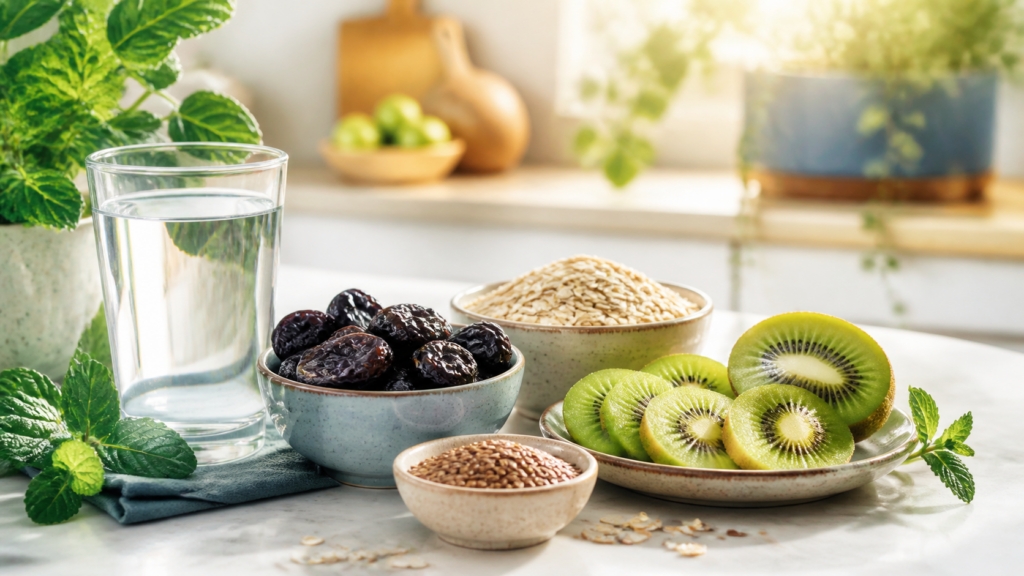
Try a stepwise approach: increase fluids and soluble fiber (often prunes/kiwi or psyllium), add gentle walking, and use proper toilet posture. If needed, consider an osmotic option while following label directions and avoiding magnesium with kidney disease. Seek care for red-flag symptoms or persistent/worsening constipation.
What These Remedies May Help With
People with mild constipation who are otherwise feeling well and can safely increase fluids, fiber, and activity (or who want to try non-prescription, home-based steps).
How These Approaches May Help
Many constipation strategies work by one or more of these mechanisms:
- **Increase stool bulk (fiber):** Helps hold water in stool and improves bowel movement rhythm.
- **Increase fluid in the gut (osmotic support):** Can soften stool and make it easier to pass.
- **Improve gut motility (movement/behavior):** Gentle activity and regular toilet routines can stimulate the digestive tract.
- **Reduce stool “dryness” (hydration):** Adequate fluids support softer stool consistency.
Common Ingredients or Materials
Home options vary; you can choose based on what you already have.
- **Water**
- **High-fiber foods:** prunes/prune juice, pears, berries, kiwi, oats, beans/lentils, whole grains, chia/flax (if tolerated)
- **Psyllium husk** (fiber supplement) *(confirm product label directions)*
- **Magnesium** (osmotic laxative options may include magnesium hydroxide or citrate) *(follow label; avoid if kidney disease unless clinician approves)*
- **Warm fluids** (e.g., warm water or tea)
- **Probiotic foods** (yogurt/kefir) *(effects vary; not a guaranteed solution)*
- **Constipation “support” behaviors:** toilet routine, footstool to elevate knees, gentle walking
General Preparation Notes
1) **Track basics for 1–2 days:** note how long it’s been, stool consistency (hard/lumpy vs. softer), pain level, and any new diet or travel.
2) **Choose one main approach first** (don’t change many variables at once). For example: fiber + fluids + walking.
3) **Prepare a toilet routine:** plan a short, unhurried attempt after meals (often after breakfast) and avoid straining.
4) **If using fiber supplements:** have enough water ready; they work best when taken with fluids.
5) **If you have any red flags:** skip home steps and seek care.
General Use Guidance
### Step 1: Hydrate strategically
- Sip **water regularly** throughout the day.
- If you tolerate it, try **a warm drink** in the morning to encourage bowel activity.
### Step 2: Add soluble fiber (start low)
- Consider **prunes** (or prune juice) or **high-fiber fruits** like kiwi.
- If using **psyllium:** start with a **small dose** and take with a full glass of water; increase gradually if needed and tolerated.
### Step 3: Gentle movement + posture
- Take a **10–20 minute walk** or do light activity daily.
- Use a **footstool** so your knees are higher than your hips while on the toilet.
- Practice a calm routine after meals; avoid prolonged straining.
### Step 4: Consider an osmotic option (if needed)
- If constipation persists after hydration/fiber/movement, some people use **osmotic laxatives** (examples may include **magnesium-based** options).
- **Important:** follow the product label exactly.
- **Avoid magnesium** unless a clinician says it’s okay if you have **kidney disease** or are on related treatments.
### Step 5: If you still need help
- If you’ve tried the steps above for several days without improvement, or symptoms worsen, seek medical guidance to choose the safest next option.
### What not to do
- Avoid frequent use of harsh stimulant methods without guidance.
- Avoid repeated “reset” attempts if you have significant pain, bleeding, or sudden severe constipation.
Constipation is common and is often related to low fiber intake, not enough fluids, inactivity, or changes in routine. This guide lists gentle home remedies that may help support regular bowel movements. If you have severe pain, blood in the stool, vomiting, unexplained weight loss, or constipation that’s new and persistent, seek medical care.
Below are practical options you can try safely at home. Start with the gentlest steps (water + fiber + movement), then consider stool-softening or osmotic options if needed.
**Quick safety check (don’t use home treatment only):** If you have any red flags (listed in this article), stop and get medical advice.
Safety Considerations
General safety guidance:
- Start low and go slow with fiber to reduce gas/bloating.
- Drink enough water to match any added fiber.
- Avoid long-term or frequent laxative use without clinician guidance.
- If you have chronic constipation, other medical conditions, or take multiple medications, confirm what’s safe with a healthcare professional.
- If constipation lasts beyond a reasonable period for you, or keeps returning, get medical advice.
Interactions & Who Should Avoid It
Potential interaction considerations (general):
- **Fiber supplements (psyllium):** may affect absorption of some medications if taken too close together—separate by a few hours or follow label instructions.
- **Magnesium-based options:** can interact with certain medications and are unsafe in some kidney-related situations—check label and clinician advice.
*Facts needing verification:* which specific medications require separation and the exact time window should be confirmed via medication guidance and product labeling.
When to Seek Professional Care
Get medical care urgently if you have:
- Severe or worsening abdominal pain
- Blood in the stool or black/tarry stool
- Vomiting, fever, or a swollen/distended belly
- Sudden constipation with significant symptoms (especially if new for you)
- Unexplained weight loss
- Constipation that persists or keeps recurring despite reasonable self-care
- If you are pregnant, elderly/frail, or immunocompromised and symptoms are significant
Frequently Asked Questions
What’s the quickest home thing to try for constipation?
Try warm fluids in the morning, then increase water and add soluble fiber (like prunes or psyllium with plenty of water) and take a short walk.
How long should I try home remedies before getting help?
If constipation is persistent, worsening, or you’re not improving after several days of reasonable self-care, consider contacting a clinician for personalized guidance.
Can fiber make constipation worse?
Yes—if you add fiber without enough water or if you increase too quickly, it can worsen bloating or stool hardness.
Are prunes a safe option?
Many people tolerate prunes well; however, responses vary and they may increase gas in some. Follow a moderate approach and stop if you have adverse effects.
Is psyllium better than other fibers?
Psyllium is a common soluble fiber option, but “best” varies by person. Start low, use adequate water, and adjust gradually.
Can I use magnesium if I’m not sure what’s causing the constipation?
Magnesium may be used by some people, but it’s not appropriate for everyone—especially those with kidney disease. Check label directions and talk to a clinician if unsure.
Should I strain to make a bowel movement happen?
No—straining can worsen discomfort and isn’t recommended. Try posture (feet elevated), relax, and allow time.
When is constipation an emergency?
Seek urgent care for severe/worsening abdominal pain, vomiting, fever, blood in stool, black/tarry stool, or a markedly swollen abdomen.