

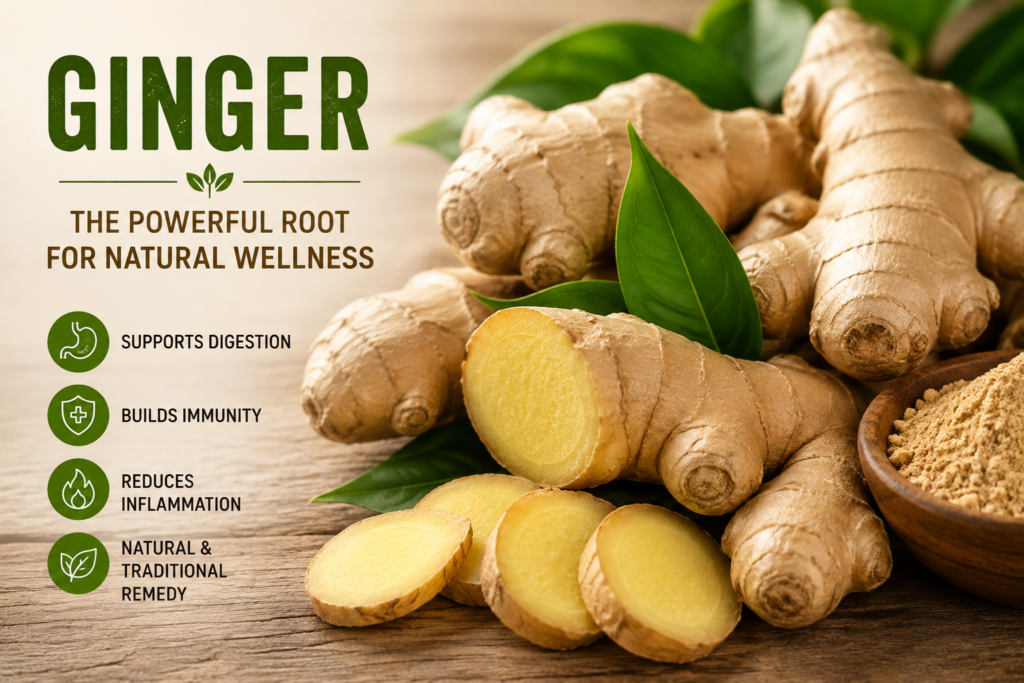
Zingiber officinale Roscoe
Description
Ginger is the aromatic underground stem (rhizome) of Zingiber officinale. It contains gingerols and shogaols, which contribute to its flavor and potential pharmacologic activity. Ginger is used fresh, dried, powdered, as a tea/infusion, and in standardized extracts in some products.
Other Common Names
Ginger
Medicinal Uses
Ginger has a history of traditional use for digestive discomfort. Traditional use alone does not establish that it reliably treats indigestion or bloating.
- Pregnancy-related nausea and vomiting: research suggests ginger may help. Consult a maternity care provider before using supplements during pregnancy.
- Motion sickness: most studies reviewed by NCCIH have not shown benefit.
- Nausea after surgery or during chemotherapy: whether ginger helps remains uncertain.
Most nausea studies tested supplements rather than ginger tea or foods. Benefits should not be assumed to be the same across preparations.
Dosage and Administration
Fresh ginger, dried powder, tea, and concentrated supplements are different preparations. There is no single dose that applies to every product or purpose.
- Follow the preparation and serving instructions for packaged ginger tea.
- For capsules or extracts, follow the specific product directions. Do not assume that amounts are interchangeable with fresh ginger or tea.
- Ask a pharmacist or clinician before supplement use if you take medication, have a medical condition, are pregnant or breastfeeding, or are treating a child.
Most nausea studies tested supplements rather than foods. A homemade preparation should not be assumed to provide the same effects.
Common Preparations
- Ginger tea: fresh ginger steeped or simmered in hot water and strained, or a packaged tea prepared according to its instructions.
- Culinary use: fresh or dried ginger added to foods and drinks for flavor.
- Capsules and extracts: supplements with product-specific ingredients and concentrations. Follow their directions and seek professional advice when appropriate.
Homemade tea varies in strength and is not equivalent to the supplements used in clinical studies.
Ginger is a widely used culinary and medicinal herb (a rhizome) in traditional systems and modern complementary practice. Evidence exists for some uses (especially nausea, and certain types of digestive discomfort), but quality, dosing, and outcomes vary by product and condition. This profile focuses on educational, evidence-aware home use and highlights where claims are uncertain.
Evidence Summary
Ginger has been studied for several types of nausea, with different results:
- Pregnancy-related nausea and vomiting: research suggests ginger may help. Consult a healthcare professional before using ginger supplements during pregnancy.
- Motion sickness: most studies reviewed by NCCIH have not shown benefit.
- Chemotherapy-related or postoperative nausea and vomiting: whether ginger helps remains uncertain.
Most nausea studies tested supplements rather than ginger tea or foods. Their findings should not automatically be extended to home preparations.
Ginger also has traditional digestive uses, but this does not establish that it reliably treats indigestion or bloating.
Safety Considerations
- Ginger taken by mouth can cause abdominal discomfort, heartburn, diarrhea, and irritation of the mouth or throat.
- Food, tea, and concentrated supplements differ in strength. Follow the directions for the specific product.
- If you take medication, ask a pharmacist or clinician before using ginger supplements so they can assess possible interactions.
- Ginger may help pregnancy-related nausea, but consult your maternity care provider before using supplements. Safety during breastfeeding is less well understood.
- Tell your surgical team about any ginger supplements before a planned procedure.
- Stop using a product that causes troublesome symptoms and seek medical advice for severe or persistent symptoms.
Possible Side Effects
Ginger taken by mouth can cause:
- Abdominal discomfort
- Heartburn
- Diarrhea
- Mouth or throat irritation
Stop using a product if side effects are troublesome. Seek medical advice for severe or persistent symptoms.
Interactions & Contraindications
If you take medication, ask a pharmacist or clinician before using ginger supplements. Provide the product label, intended amount, and your medication list so they can assess possible interactions.
Interaction risks may differ between food amounts, teas, and concentrated supplements. The absence of a specific interaction listed here does not establish that ginger is safe with every medicine.
Do not use a ginger product if you have a known allergy to ginger or another ingredient in it.
Who Should Avoid It
- People with a known allergy to ginger or another ingredient should avoid that product.
- People taking medication or managing a chronic medical condition should seek professional advice before using ginger supplements.
- People who are pregnant should consult their maternity care provider before using ginger supplements. Safety during breastfeeding is not well established.
- People whose heartburn or abdominal discomfort worsens with ginger should stop using it.
- Anyone preparing for surgery should tell their surgical team about supplements they use.
Do not use ginger supplements in place of medical assessment or prescribed treatment.
Frequently Asked Questions
What form of ginger is best for nausea?
There is no single best form for every type of nausea. Most studies tested ginger supplements rather than tea or foods, and results differ by the cause of nausea. Homemade ginger tea should not be assumed to provide the same effects as studied supplements.
Can I use ginger during pregnancy?
Research suggests ginger may help pregnancy-related nausea and vomiting. Consult your maternity care provider before using ginger supplements so they can assess the product and your circumstances.
Is ginger the same as ginger root powder?
Ginger root powder is made from dried ginger rhizome; it can be more concentrated by weight than fresh ginger. Compare label directions if using standardized products.
How long should I try ginger for indigestion?
There is no established trial period for homemade ginger preparations. Stop if ginger worsens heartburn or discomfort. Seek medical advice if indigestion persists, recurs frequently, or worsens.
Can ginger interact with blood thinners?
If you take a blood thinner or antiplatelet medicine, ask your pharmacist or prescribing clinician before using ginger supplements. Provide the product label and intended amount so they can assess possible interactions. Do not stop prescribed medication to take ginger.
Sources
National Center for Complementary and Integrative Health (NCCIH). Ginger: Usefulness and Safety. https://www.nccih.nih.gov/health/ginger
European Medicines Agency (EMA). Zingiberis rhizoma — Ginger. https://www.ema.europa.eu/en/medicines/herbal/zingiberis-rhizoma