

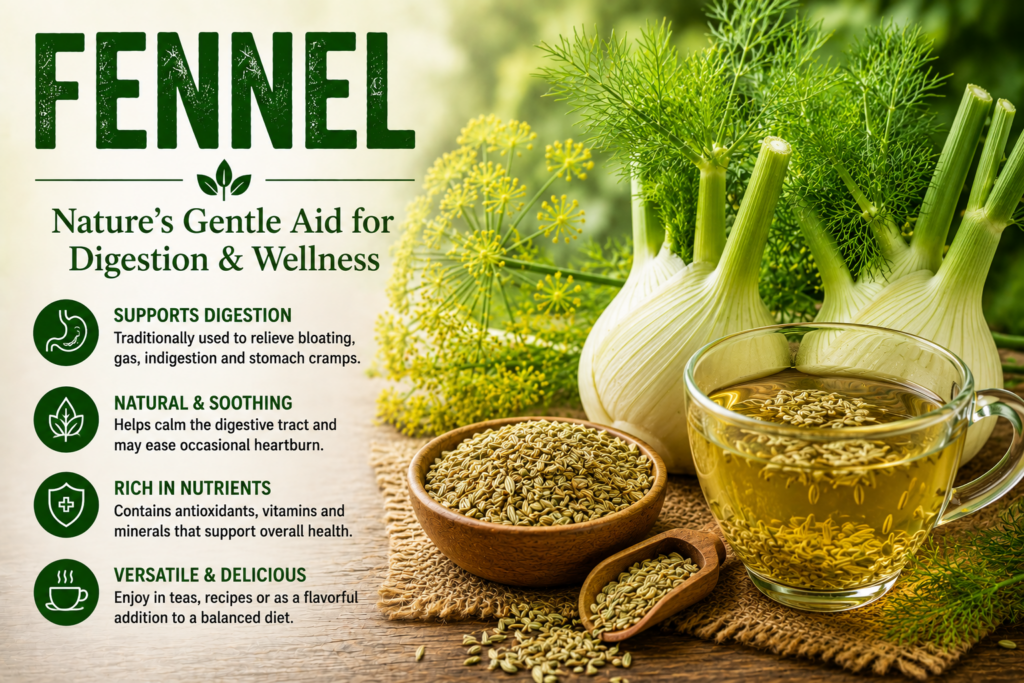
Foeniculum vulgare subsp. vulgare var. dulce — Sweet fennel
Description
Sweet fennel (Foeniculum vulgare subsp. vulgare var. dulce) is an aromatic plant in the Apiaceae family. This profile focuses on its dried fruit, commonly called fennel seed, used in herbal tea and as a spice.
The evidence and medicinal guidance discussed here concern sweet fennel fruit preparations. They should not automatically be applied to fennel bulbs, leaves, essential oils, or concentrated extracts.
Other Common Names
Fennel, sweet fennel (often), common fennel, anise fennel (sometimes used informally)
Medicinal Uses
EMA recognizes sweet fennel fruit preparations for the following traditional medicinal uses:
- Digestive comfort: relief of mild digestive spasms, bloating, and gas.
- Relief of minor cramps associated with menstrual periods.
- Use as an expectorant to help bring up mucus during coughs associated with colds.
These uses are based on long-standing experience rather than sufficient clinical trial evidence to establish effectiveness. They do not establish the same benefits for essential oils or concentrated extracts.
Fennel is not recommended here to increase breast milk production. EMA does not recommend medicinal sweet fennel fruit use during breastfeeding because adequate safety information is lacking.
Dosage and Administration
For packaged sweet fennel fruit tea, follow the product’s preparation, serving, and age instructions. This article does not provide a universal dose for homemade preparations.
EMA’s 2024 monograph limits medicinal use in adults and adolescents to two weeks. Consult a healthcare professional sooner if symptoms persist or worsen.
Medicinal use is not recommended during pregnancy, breastfeeding, or in children under 4. For older children, seek professional guidance because preparation, duration, and estragole content matter.
Do not use tea instructions to dose essential oils, tinctures, or concentrated extracts.
Common Preparations
- Fennel seed tea/infusion: prepared from dried sweet fennel fruit according to the packaged product’s directions.
- Culinary use: fennel seeds used as a spice. Culinary use is distinct from a medicinal treatment regimen.
- Other products: tinctures, extracts, and essential oils differ from fruit tea. The EMA sweet fennel fruit monograph does not establish their dosing or safety.
This profile focuses on sweet fennel fruit, commonly called fennel seed, rather than fennel bulbs or leaves.
Sweet fennel (Foeniculum vulgare subsp. vulgare var. dulce) is an aromatic plant whose dried fruit, commonly called fennel seed, is used as a spice and in herbal tea. It has traditional medicinal uses for mild bloating, gas, and digestive spasms, but clinical evidence remains limited.
This guide focuses on sweet fennel fruit preparations, their evidence, and important safety precautions. Its guidance should not be extended to essential oils or concentrated extracts. Medicinal use is not recommended during pregnancy or breastfeeding.
Evidence Summary
Sweet fennel fruit, commonly called fennel seed, has traditional medicinal uses for mild bloating, gas, and minor digestive spasms. EMA also recognizes traditional uses for minor menstrual cramps and as an expectorant for coughs associated with colds.
These uses are based on long-standing experience rather than sufficient clinical trial evidence to establish effectiveness. Findings for fennel fruit preparations should not automatically be applied to essential oils, concentrated extracts, or culinary fennel bulbs.
This profile does not establish fennel as a treatment for hormonal conditions or as a way to increase breast milk production.
Safety Considerations
These precautions concern medicinal sweet fennel fruit preparations:
- Do not use if allergic to fennel, anethole, related Apiaceae plants such as aniseed, caraway, celery, coriander, or dill, or mugwort pollen.
- Medicinal use during pregnancy or breastfeeding is not recommended because adequate safety information is lacking.
- Use is not recommended for children under 4. For older children, seek professional guidance because age, preparation, duration, and estragole content matter.
- EMA limits medicinal use in adults and adolescents to two weeks. Seek medical advice sooner if symptoms persist or worsen.
- Fennel contains estragole, a constituent whose exposure EMA advises keeping as low as practically achievable. Avoid assuming that stronger or prolonged preparations are better.
- This guidance does not establish the safety of swallowing fennel essential oil.
Possible Side Effects
Sweet fennel fruit preparations can cause allergic reactions affecting the skin or respiratory system. How often these reactions occur is unknown.
Stop use if a reaction develops and seek medical advice. Get emergency help for difficulty breathing or swelling of the lips, tongue, or throat.
Interactions & Contraindications
EMA’s 2024 sweet fennel fruit monograph reports no medicinal interactions for the preparation it covers. This does not prove that interactions are impossible or establish the safety of concentrated extracts or essential oils.
If you take medication, ask a pharmacist or clinician before medicinal use and provide the product label.
Do not use if allergic to fennel, anethole, related Apiaceae plants such as aniseed, caraway, celery, coriander, or dill, or mugwort pollen.
Who Should Avoid It
- People allergic to fennel, anethole, related Apiaceae plants, or mugwort pollen should not use sweet fennel fruit preparations.
- Medicinal use is not recommended during pregnancy or breastfeeding because adequate safety information is lacking.
- Children under 4 should not receive these medicinal preparations. For older children, seek professional guidance because preparation, duration, and estragole content matter.
- People taking medication or managing a medical condition should seek professional advice before medicinal use.
- Do not swallow products intended only for aromatherapy or external use. The sweet fennel fruit monograph does not establish oral essential-oil safety.
Frequently Asked Questions
What part of fennel is used for remedies?
Most traditional home remedies use the seeds (for tea/infusion). Bulb/stalk is primarily culinary.
Is fennel safe to take every day?
Ordinary food use differs from medicinal use. EMA limits medicinal sweet fennel fruit use in adults and adolescents to two weeks. Follow the product directions and seek medical advice if symptoms persist or worsen. Do not assume prolonged daily use is safe.
Can fennel help with gas and bloating?
Sweet fennel fruit has traditional medicinal uses for mild bloating, gas, and digestive spasms. EMA recognizes these uses based on long-standing experience rather than sufficient clinical trial evidence to establish effectiveness.
Can I use fennel essential oil for tea instead?
No. Essential oil is not interchangeable with fennel fruit tea. The sweet fennel fruit monograph does not establish essential-oil dosing or safety. Do not add aromatherapy oil to a drink or swallow products intended only for external use.
Is fennel safe during pregnancy or breastfeeding?
EMA does not recommend medicinal sweet fennel fruit use during pregnancy or breastfeeding because adequate safety information is lacking. Ask your healthcare professional about your circumstances.
Does fennel affect hormones or milk production?
This profile does not establish fennel as a treatment for hormonal conditions or as a way to increase breast milk production. These are not recognized uses in EMA’s sweet fennel fruit monograph, which does not recommend medicinal use during breastfeeding.
Sources
European Medicines Agency (EMA). Foeniculi dulcis fructus — Sweet fennel fruit. https://www.ema.europa.eu/en/medicines/herbal/foeniculi-dulcis-fructus
European Medicines Agency (EMA). European Union herbal monograph on Foeniculum vulgare subsp. vulgare var. dulce, fructus — Revision 1 (2024). https://www.ema.europa.eu/en/documents/herbal-monograph/final-european-union-herbal-monograph-foeniculum-vulgare-miller-subsp-vulgare-var-dulce-mill-batt-trab-fructus-revision-1_en.pdf