

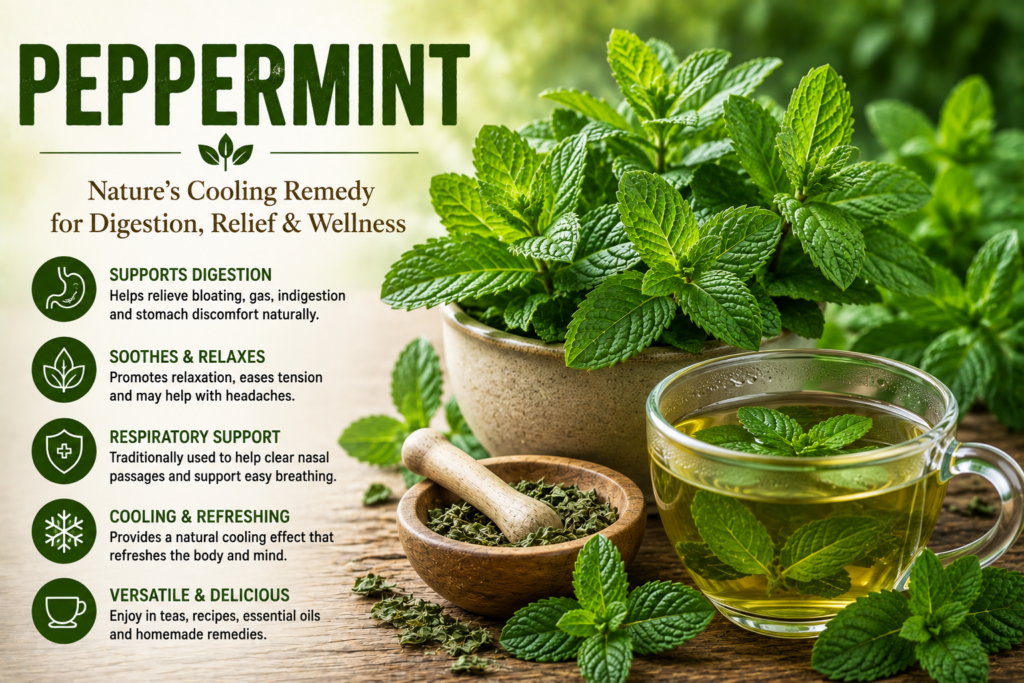
Mentha × piperita
Free Herbal Remedies Toolkit
Get practical herb references, tea ideas, safety notes, and printable tracking pages.
Description
Peppermint is a hybrid mint (Mentha × piperita) with strongly aromatic leaves. It’s often prepared as tea (typically from dried leaves) or used as an oil in standardized products (e.g., enteric-coated preparations made to reduce stomach release). The leaf and oil contain volatile compounds such as menthol, which contributes to its characteristic flavor and cooling sensation.
Other Common Names
Peppermint, garden peppermint
Medicinal Uses
Peppermint has a history of traditional use for digestive complaints. Research on peppermint leaf and tea is limited, so their effectiveness for specific symptoms remains uncertain.
Some research suggests that enteric-coated peppermint oil capsules may improve overall IBS symptoms and abdominal pain in adults. These findings should not be extended to peppermint tea or other preparations. Oral peppermint oil can also cause heartburn or worsen indigestion in some people.
Dosage and Administration
Peppermint tea and peppermint oil capsules have different concentrations and directions. There is no single dose that applies to every preparation.
- For packaged peppermint tea, follow the preparation and serving instructions.
- For peppermint oil capsules, follow the specific product directions. Do not substitute aromatherapy oil or use tea instructions to measure oil.
- Ask a pharmacist or clinician before medicinal use if you take medication, have ongoing medical conditions, are pregnant or breastfeeding, or are treating a child.
Common Preparations
- Peppermint tea: an infusion of peppermint leaves, prepared according to the product instructions.
- Culinary use: fresh or dried leaves used to flavor foods and drinks.
- Enteric-coated peppermint oil capsules: a concentrated preparation studied for IBS symptoms in adults. Findings from these capsules do not establish the same benefits for tea.
- Other peppermint oil products: intended uses vary. Follow the stated route of use; do not swallow products sold only for aromatherapy or external use.
Peppermint is an aromatic mint commonly used as a tea and in food. In herbal practice, it’s especially associated with digestive comfort. Some evidence exists for certain digestive symptoms (e.g., symptoms consistent with IBS), but effects can vary and the herb is not right for everyone—particularly for people with reflux/GERD.
Evidence Summary
Research suggests that peppermint oil in enteric-coated capsules may improve overall irritable bowel syndrome (IBS) symptoms and abdominal pain in some adults. Benefits are not guaranteed, and side effects such as reflux or indigestion can occur.
Peppermint leaf and tea have been studied much less. Evidence from peppermint oil capsules should not be treated as proof that peppermint tea provides the same benefits. Findings also depend on the preparation and condition studied.
Safety Considerations
- Peppermint tea and peppermint oil are different preparations. Do not use tea instructions to dose concentrated oil.
- Oral peppermint oil can cause heartburn or worsen reflux. Stop using a product that makes your symptoms worse.
- Use peppermint oil products specifically intended for the stated route of use and follow their directions. Do not improvise doses or swallow aromatherapy oils.
- Do not apply peppermint oil to the face of infants or young children. Inhaling its menthol can cause serious breathing problems.
- Little is known about the safety of medicinal amounts during pregnancy or breastfeeding. Ask a healthcare professional before medicinal use or giving peppermint products to a child.
- Peppermint tea appears safe, but the long-term safety of consuming large amounts of peppermint leaf is unknown.
- If you take medication, discuss medicinal peppermint use with a pharmacist or clinician.
Possible Side Effects
- Peppermint oil taken by mouth can cause heartburn, nausea, abdominal pain, or dry mouth.
- Allergic reactions to peppermint oil occur rarely.
- Applying peppermint oil to the skin can cause irritation or a rash.
- Enteric-coated capsules may reduce the likelihood of heartburn, but side effects can still occur.
These effects relate primarily to peppermint oil and should not automatically be attributed to peppermint tea.
Interactions & Contraindications
If you take medication, ask a pharmacist or clinician before using medicinal peppermint products. Bring the product label so they can check its ingredients, formulation, and directions against your medicines.
Peppermint tea, enteric-coated oil capsules, and other concentrated products are not interchangeable. The absence of an interaction listed here does not mean a product is safe with every medicine.
Avoid products containing ingredients to which you are allergic. Oral peppermint oil may also cause or worsen heartburn.
Who Should Avoid It
- People with a known allergy to peppermint or a product’s ingredients should avoid that product.
- People whose heartburn or reflux worsens with peppermint should stop using it and discuss alternatives with a healthcare professional.
- People who are pregnant or breastfeeding should seek professional advice before medicinal use because safety information is limited.
- Children should receive medicinal peppermint products only with age-appropriate professional guidance. Never apply peppermint oil to an infant’s or young child’s face.
- Anyone considering swallowing an aromatherapy oil or a product not intended for oral use should avoid doing so.
Frequently Asked Questions
What is peppermint commonly used for?
Traditionally for digestive comfort (e.g., indigestion, gas). Evidence is more supportive for some bowel symptoms when using specific peppermint oil preparations.
Is peppermint tea as effective as peppermint oil?
Peppermint tea and peppermint oil capsules are different preparations. Some research supports enteric-coated peppermint oil capsules for IBS symptoms in adults, but peppermint leaf and tea have been studied much less. Tea has not been shown to provide the same benefits.
Can peppermint worsen heartburn?
It may. If peppermint (tea or oil) worsens your reflux, consider avoiding it.
Are peppermint essential oils safe to take internally?
Some peppermint oil products are specifically formulated for oral use, including enteric-coated capsules studied for IBS. These are different from aromatherapy oils. Do not swallow products intended only for aromatherapy or external use. Follow the specific oral product’s directions and ask a pharmacist or clinician if unsure.
Who should be cautious with peppermint supplements?
People with reflux/GERD and those who are pregnant, breastfeeding, or treating children should use extra caution and consider medical advice, especially for concentrated oil products.
Sources
National Center for Complementary and Integrative Health (NCCIH). Peppermint Oil: Usefulness and Safety. https://www.nccih.nih.gov/health/peppermint-oil
European Medicines Agency (EMA). Menthae piperitae folium — Peppermint leaf. https://www.ema.europa.eu/en/medicines/herbal/menthae-piperitae-folium
European Medicines Agency (EMA). Menthae piperitae aetheroleum — Peppermint oil. https://www.ema.europa.eu/en/medicines/herbal/menthae-piperitae-aetheroleum
References & Sources
Trusted sources used to support this article.