

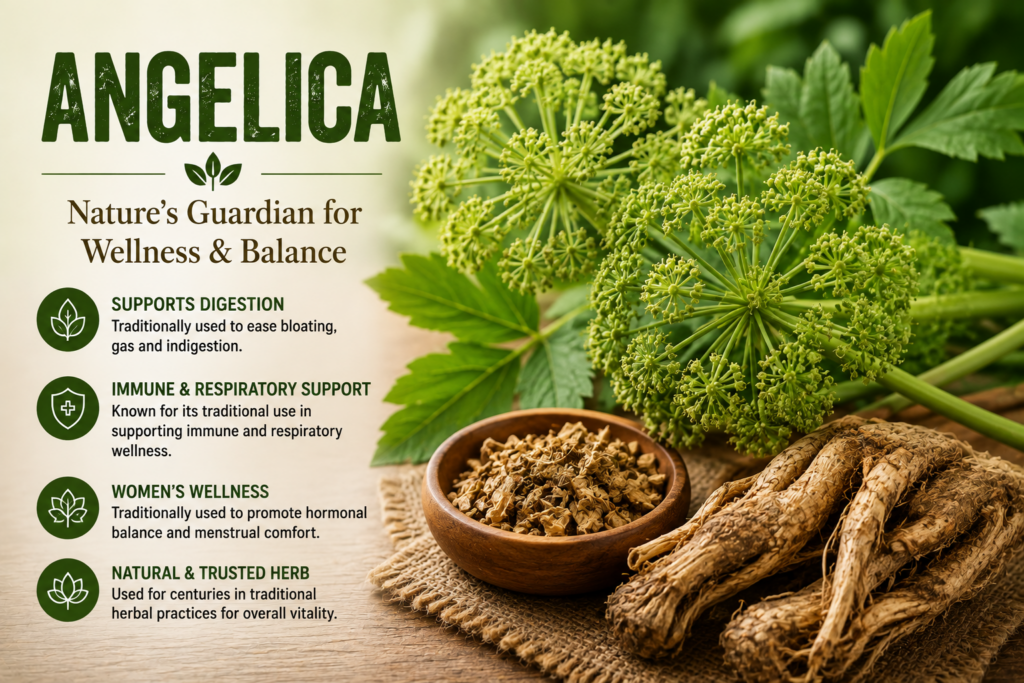
Angelica spp. (commonly *Angelica archangelica*; verify exact species)
Description
Angelica plants are biennial/perennial aromatic herbs with hollow stems and umbels of small flowers. In herbal practice, the root (often dried) and/or seeds/rhizomes are commonly used. The plant’s strong, distinctive aroma is one reason it is used in liqueurs, bitters, and culinary preparations (as a flavoring), as well as in some traditional systems of herbalism.
Other Common Names
Angelica; garden angelica; archangelica (common names vary by region)
Medicinal Uses
Traditional uses (species/part dependent):
- Digestive support (e.g., for indigestion or “bloating” in folk practice)
- Carminative/aromatic use (to support comfort after meals)
Evidence note: Human clinical evidence for specific outcomes is limited and not consistent across all *Angelica* species and preparations. Treat claims as traditional/folkloric unless supported by reliable, species-specific references.
Dosage and Administration
Because safe and effective dosing depends strongly on the exact species and plant part, this profile does not provide specific dosage instructions. If you use a commercial product, follow the label directions for that product’s standardized ingredients. If you are considering a DIY preparation, be aware that concentration can vary widely and that incorrect identification/strength can increase risk.
Common Preparations
Common preparation types (general):
- Dried root (infusion/tea) — traditional approach; strength varies
- Seed/fruit extracts (tea or tincture in some traditional preparations)
- Essential oil — generally higher risk due to concentration (avoid unless specifically advised by a qualified professional)
- Culinary use (small amounts as a flavoring) — generally lower risk than concentrated extracts
Uncertainty flag: Preparation methods and constituents differ by species and extraction method; some concerns (e.g., photosensitivity) may be more relevant for certain preparations than for culinary amounts.
Angelica refers to several aromatic plants in the genus *Angelica* (most commonly *Angelica archangelica* and sometimes closely related species). In traditional herbal use, parts of angelica have been used as a digestive aid and as a flavoring/aromatic. However, specific benefits, safe use, and appropriate dosing can vary significantly by species, part used (root, seed, leaf), preparation, and local regulations. Always verify the exact species and product labeling, and consider speaking with a qualified clinician—especially if you are pregnant, taking medications, or using concentrated preparations.
Note: Angelica species can contain furocoumarins and may be associated with photosensitivity risk (risk may vary by species and preparation). This profile provides cautious, educational information and avoids specific medical claims or dosing directions where evidence is uncertain.
Evidence Summary
Evidence is mixed/limited and highly dependent on:
- the exact *Angelica* species
- which plant part is used (root vs seed vs leaf)
- the preparation (tea vs tincture vs extract vs essential oil)
- the outcome being measured
Educational takeaway: Angelica is most reliably described as an aromatic herb with traditional digestive uses; stronger medical claims should be approached cautiously unless supported by reliable, species-specific references.
Safety Considerations
Caution is advised.
- Photosensitivity risk: Some *Angelica* species contain furocoumarins; these compounds can increase sensitivity to sunlight in certain situations. Risk may depend on dose and preparation. If using products that may have furocoumarins, consider extra sun protection and consult a clinician.
- Pregnancy/breastfeeding: Safety information is uncertain; avoid medicinal use unless a qualified healthcare professional specifically advises it.
- Allergies/plant identification: Misidentification can be a concern with wild-harvested plants. Use only reliable, correctly identified sources.
- Concentrated products: Essential oils and high-concentration extracts can be more likely to cause adverse effects than culinary amounts.
This page does not make safety assurances for any specific product or preparation.
Possible Side Effects
Potential/possible side effects (uncertain; may vary):
- Gastrointestinal upset (in some aromatic herbs)
- Skin irritation or photosensitivity (particularly if furocoumarins are present)
Uncertainty flag: Specific frequency and severity for angelica are not provided here due to limited and variable evidence.
Interactions & Contraindications
Interactions cannot be reliably listed for all *Angelica* species and preparations based on the information available here. To reduce risk:
- Tell your clinician/pharmacist about any angelica use, especially if you take anticoagulants, antiplatelet drugs, hormone-related medications, or photosensitizing medicines.
- Avoid assuming “herbal = no interaction.”
Who Should Avoid It
Consider avoiding angelica medicinal use (or seek professional advice first) if:
- You are pregnant or breastfeeding (safety uncertain)
- You have a history of significant photosensitivity reactions
- You are using medications known to increase sun sensitivity (confirm with a clinician/pharmacist)
- You cannot confirm the exact species and plant part, or the product is not from a reputable source
Frequently Asked Questions
What is angelica used for?
Traditionally, angelica (*Angelica* spp.) has been used as an aromatic supportive herb for digestion. Evidence for specific health effects varies by species and preparation.
Is angelica safe to use in tea?
Safety depends on species, plant part, and preparation strength. Concentrated or improperly identified products may carry higher risk. If using a labeled product, follow directions; for DIY, be cautious.
Can angelica cause sun sensitivity?
Some *Angelica* species contain furocoumarins, which can be associated with photosensitivity. Risk may vary; if you use products that could contain these compounds, use sun protection and consider professional guidance.
Which species should I choose?
Many uses and safety concerns differ by species. If choosing a product, use one that clearly states the botanical name (e.g., *Angelica archangelica*), the part used, and standardized content (if applicable).
Can I use angelica essential oil?
Essential oils are more concentrated and can pose higher risk. This profile does not recommend essential-oil dosing; consult a qualified professional before use.
Sources
Verifiable, non-fabricated recommendations (to consult for species-specific safety and traditional use):
- Memorial Sloan Kettering Cancer Center (MSKCC) Integrative Medicine “Herbs” pages for angelica or related entries (check their botanical name/category)
- European Medicines Agency (EMA) and/or European herbal monographs/assessment documents for *Angelica* species where available
- Commission E monographs (where applicable) or other reputable herbal regulatory monographs by country
- Reputable botanical references (e.g., reputable plant manuals) for identification and constituents
Tip: Look up the exact species (*Angelica archangelica* vs other *Angelica* spp.) and the specific plant part (root vs seed), since recommendations differ.