

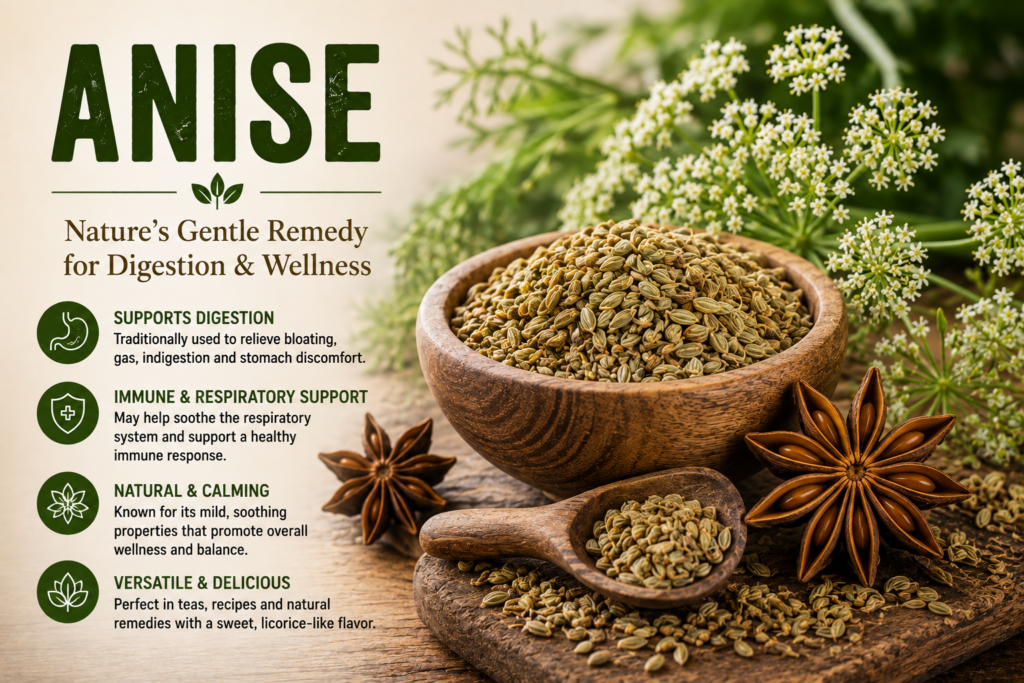
Pimpinella anisum
Free Herbal Remedies Toolkit
Get practical herb references, tea ideas, safety notes, and printable tracking pages.
Description
True anise (Pimpinella anisum) is an aromatic plant in the Apiaceae family. Its “anise seed” (often the dried fruit/seed-like structure) is commonly crushed for flavor and traditional herbal infusions. Distinguish it from star anise (Illicium verum), which is a different plant.
Other Common Names
Anise; sweet anise (often used interchangeably with “anise seed” in culinary/herbal contexts)
Medicinal Uses
Aniseed (Pimpinella anisum) is traditionally used for digestive comfort, including mild bloating and gas. EMA recognizes this use for dried or crushed aniseed preparations based on their long history of use; clinical trial evidence is insufficient to establish effectiveness. These conclusions do not apply to essential oils or concentrated extracts.
Dosage and Administration
Follow the directions for the specific aniseed product; preparation strengths vary. This article does not provide a universal dose. EMA’s guidance for medicinal dried or crushed aniseed preparations limits use to two weeks. Seek medical advice sooner if symptoms persist or worsen. Medicinal use is not recommended during pregnancy or breastfeeding, or for children under 12.
Common Preparations
- Seed infusions/teas: prepared from dried or crushed true aniseed (Pimpinella anisum).
- Culinary use: whole or crushed aniseed used as a food seasoning.
- Other products: extracts, tinctures, and essential oils differ from aniseed tea. EMA’s dried-aniseed guidance does not establish their dosing or safety.
Evidence Summary
Aniseed (Pimpinella anisum) has a history of traditional use for mild digestive complaints, including bloating and gas. The European Medicines Agency’s assessment supports this traditional use but notes that clinical trial evidence is insufficient to establish effectiveness. Its conclusions apply to dried or crushed aniseed preparations, commonly taken as herbal tea, and should not be extended to essential oils or other concentrated products.
Safety Considerations
These precautions apply to medicinal aniseed preparations, rather than ordinary use as a food seasoning:
- Do not use if allergic to aniseed, anethole, or related Apiaceae plants such as celery, coriander, dill, fennel, or caraway.
- Medicinal use is not recommended during pregnancy or breastfeeding, or for children under 12, because adequate safety data are lacking.
- Follow the product’s directions. EMA’s aniseed monograph limits medicinal use to two weeks; consult a healthcare professional sooner if symptoms persist or worsen.
- Allergic reactions affecting the skin or airways can occur. Stop use if a reaction develops.
- This guidance covers dried or crushed aniseed preparations. It does not establish the safety of swallowing anise essential oil.
Possible Side Effects
Aniseed preparations can cause allergic reactions affecting the skin or respiratory system. How often these reactions occur is unknown. Stop use if a reaction develops and seek medical advice. Get emergency help for difficulty breathing or swelling of the lips, tongue, or throat.
Interactions & Contraindications
The EMA aniseed monograph reports no medicinal interactions for the dried or crushed aniseed preparations it covers. This does not prove that interactions are impossible and should not be extended to essential oils or concentrated extracts. If you take medication, ask a pharmacist or clinician before medicinal use.
Do not use aniseed preparations if you are allergic to aniseed, anethole, or related Apiaceae plants, including celery, coriander, dill, fennel, or caraway.
Who Should Avoid It
- People allergic to aniseed, anethole, or related Apiaceae plants such as celery, coriander, dill, fennel, or caraway should not use aniseed preparations.
- Medicinal aniseed preparations are not recommended during pregnancy or breastfeeding, or for children under 12, because adequate safety data are lacking.
- Anyone with persistent or worsening symptoms should seek medical assessment rather than continue self-treatment.
Frequently Asked Questions
What is the difference between anise and star anise?
True anise is Pimpinella anisum; star anise is Illicium verum and is a different plant. Don’t assume they’re interchangeable.
Can I use anise tea for gas or bloating?
Dried or crushed aniseed has a history of traditional use for mild bloating and gas. EMA recognizes this traditional use, but clinical trial evidence is insufficient to establish effectiveness. Consult a healthcare professional if symptoms persist or worsen.
Is anise essential oil safe to take by mouth?
Anise essential oil is different from aniseed tea. EMA’s guidance for dried or crushed aniseed does not establish the safety or dosing of essential oil. Do not use this article as guidance for swallowing essential oil.
How can I identify true anise?
Look for the botanical name Pimpinella anisum on packaging or confirm with a reputable supplier. Star anise will typically be labeled Illicium verum.
Are there risks for children?
EMA does not recommend medicinal aniseed preparations for children under 12 because adequate safety data are lacking. Ask a pediatric clinician before giving a child aniseed for medicinal purposes.
Sources
European Medicines Agency (EMA). Anisi fructus — Aniseed (Pimpinella anisum L.). Traditional medicinal uses, evidence assessment, and safety information.
https://www.ema.europa.eu/en/medicines/herbal/anisi-fructus
Royal Botanic Gardens, Kew. Pimpinella anisum L. Plants of the World Online. Botanical identity and classification.
https://powo.science.kew.org/taxon/urn%3Alsid%3Aipni.org%3Anames%3A846658-1